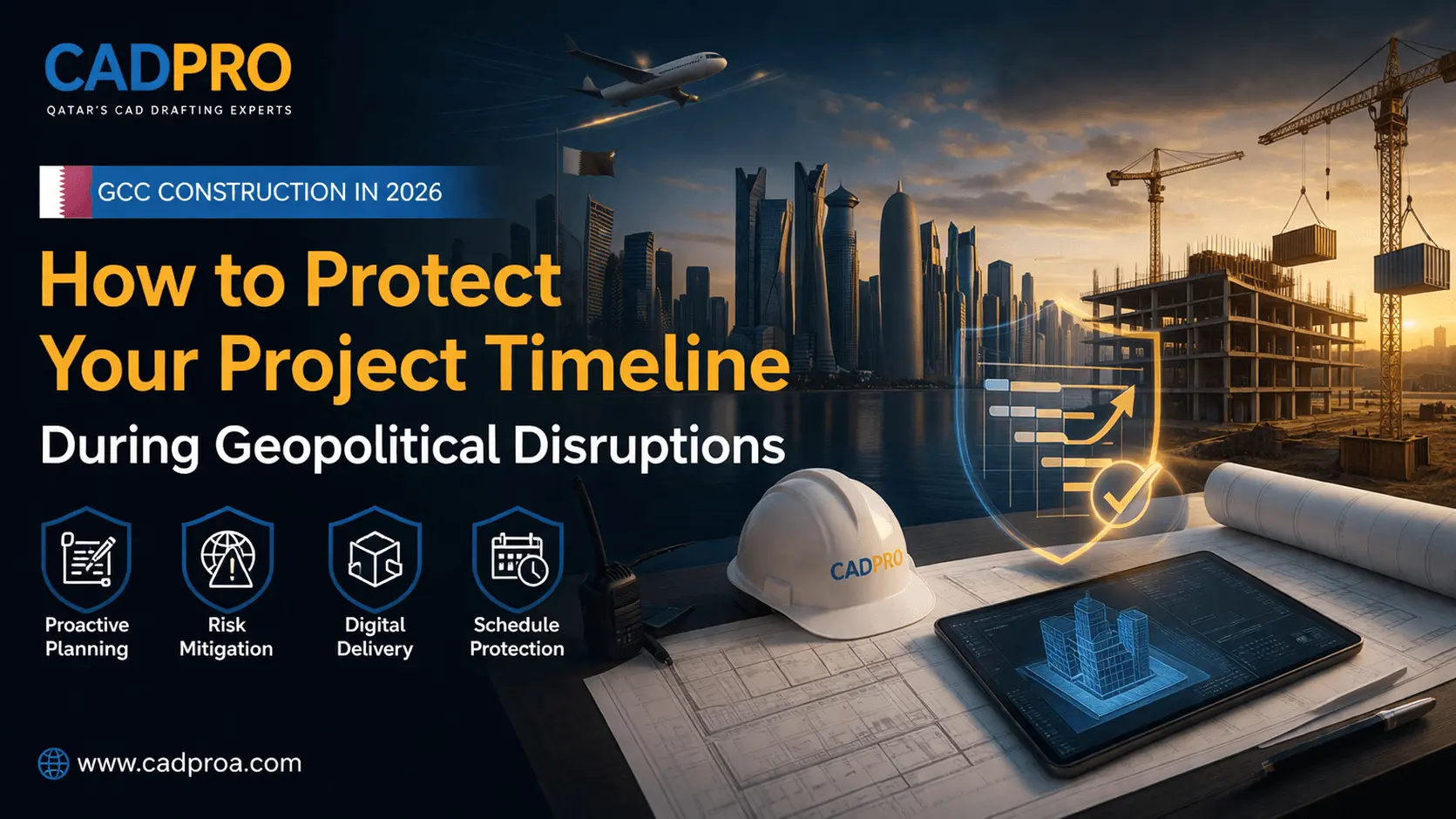
GCC Construction in 2026: How to Protect Your Project Timeline During Geopolitical Disruptions
Qatar’s construction sector entered 2026 with genuine momentum. Vision 2030 projects were progressing, new infrastructure tenders were active, and most contractors were running at capacity. Then the first quarter brought a combination of disruptions that arrived at the same time — regional geopolitical tensions from late February, Ramadan beginning February 18, and supply chain pressures building quietly in the background.
For project teams managing live work in Doha right now, the impact is practical and immediate. Some material deliveries are delayed. Some international consultants cannot travel. Some clients have paused decisions. And in the middle of all of this, the documentation backlog keeps growing.
This post covers what is actually happening across GCC construction projects, what the real risks are to your timeline, and what experienced contractors are doing to stay on track.
What Is Happening Across GCC Projects Right Now
The disruptions affecting Qatar’s construction sector in early 2026 are coming from three directions simultaneously.
First, international shipping through the Strait of Hormuz has been significantly affected. Construction materials sourced from Europe, Asia, and beyond — steel sections, MEP components, specialist equipment — are facing delays at a level not seen in recent years. Contractors who built their procurement schedules around pre-disruption delivery timelines are now managing gaps on site.
Second, the economic uncertainty created by the regional situation has caused some project owners and developers to pause investment decisions and review project scopes. According to analysts tracking GCC markets, this kind of pause typically creates a 6–12 week delay in drawing approvals, scope confirmations, and procurement sign-offs — even on projects that ultimately continue unchanged.
Third, international workforce mobility has been disrupted. Airspace restrictions and travel advisories have made it difficult for international engineering consultants and specialist drafting staff to travel freely into Qatar. Teams that depend on visiting consultants for drawing reviews and approvals are finding those review cycles stretched.
These three pressures together are creating something familiar to experienced Qatar contractors — a documentation backlog that compounds quietly until it becomes a critical path issue.
The Risk Nobody Is Talking About
Most project managers are focused on the visible disruptions — delayed materials, paused decisions, travel issues. These are real and worth managing. But the less visible risk is the documentation backlog building in parallel.
When site activity slows, drawing reviews tend to slow with it. Shop drawing submissions get pushed back. MEP coordination model updates are deprioritised. As-built records fall behind. Nobody flags it as urgent because the site is slower anyway.
Then when activity resumes — and in Qatar, it always resumes — the project team discovers that the documentation is 6–8 weeks behind where it should be. Kahramaa submissions are overdue. Shop drawings for the next phase are not approved. Coordination clashes that should have been resolved in the model are now being resolved on site — which is always more expensive and time-consuming.
This is the real timeline risk of a disruption period. Not the disruption itself — but the documentation debt that accumulates during it.
What Experienced Contractors Are Doing Differently
The contractors who navigate disruption periods most effectively share one common approach — they separate documentation work from site conditions.
Drawing production, BIM coordination, MEP shop drawings, structural details, and as-built updates do not require materials to arrive or consultants to travel. They require a competent drafting team, the right software, and clear project information. All of which can continue regardless of what is happening on site or in the region.
Specifically, experienced project teams are doing five things right now:
Auditing their drawing backlog
Identifying exactly which drawings are pending approval, which shop drawings are overdue, and which coordination issues are unresolved. Getting this list in front of a drafting team immediately — rather than waiting for site activity to push it forward.
Pre-preparing tender documentation
If new project awards are being delayed, this is the right time to complete tender drawing packages in full. When procurement resumes, teams with complete documentation can respond in days rather than weeks.
Progressing MEP coordination independently of site
MEP coordination drawings and clash detection do not need to wait for materials or approvals. Resolving coordination issues now — in the model, not on site — saves significant time and cost when installation begins.
Updating as-built records
Many Qatar contractors have years of outdated as-built documentation. A slower period is the best opportunity to bring these up to date — before the next project phase begins and everyone is too busy again.
Working with a locally based drafting partner
Offshore drafting firms face the same travel disruptions and communication challenges as everyone else during a regional crisis. A Qatar-based team operates in the same timezone, understands local submission requirements, and maintains continuity regardless of international conditions.
A Note on Qatar’s Longer-Term Pipeline
It is worth keeping the bigger picture in mind. Qatar’s construction market was forecast to reach QAR 133.55 billion in 2026 (Source: ResearchAndMarkets, February 2026). The Vision 2030 infrastructure pipeline remains intact. The projects are still here. The current disruption is a pause — not a stop.
The contractors who use this period to clear their backlogs, advance their documentation, and tighten their project workflows will be in the strongest position when full activity resumes. Those who let documentation drift will spend the second half of 2026 catching up.
Keeping Projects Moving — That Is What We Do
Uncertainty in the market is not new to Qatar’s construction sector — and it is not new to us either. CADPro has been working with contractors, engineers, and consultants across Qatar for years, managing CAD drafting, MEP coordination, BIM modeling, and structural documentation through busy project phases and slow ones alike.
What we have learned is straightforward. A project’s documentation pipeline should never stop — even when the site does. The drawing work, coordination models, shop drawing submissions, and regulatory compliance documentation that keep a project on track must continue regardless of external conditions. Letting this work slip during a slow period creates a much bigger problem when activity picks up again.
A well-experienced drafting team does not just produce drawings. They track your submission deadlines, manage revision cycles, flag coordination issues before they reach site, and make sure your documentation stays aligned with Qatar’s regulatory requirements at every stage — whether the market is running at full pace or navigating a difficult quarter.
If your project team is carrying a documentation backlog or needs support keeping drawings on schedule during this period, our team is ready to help.