
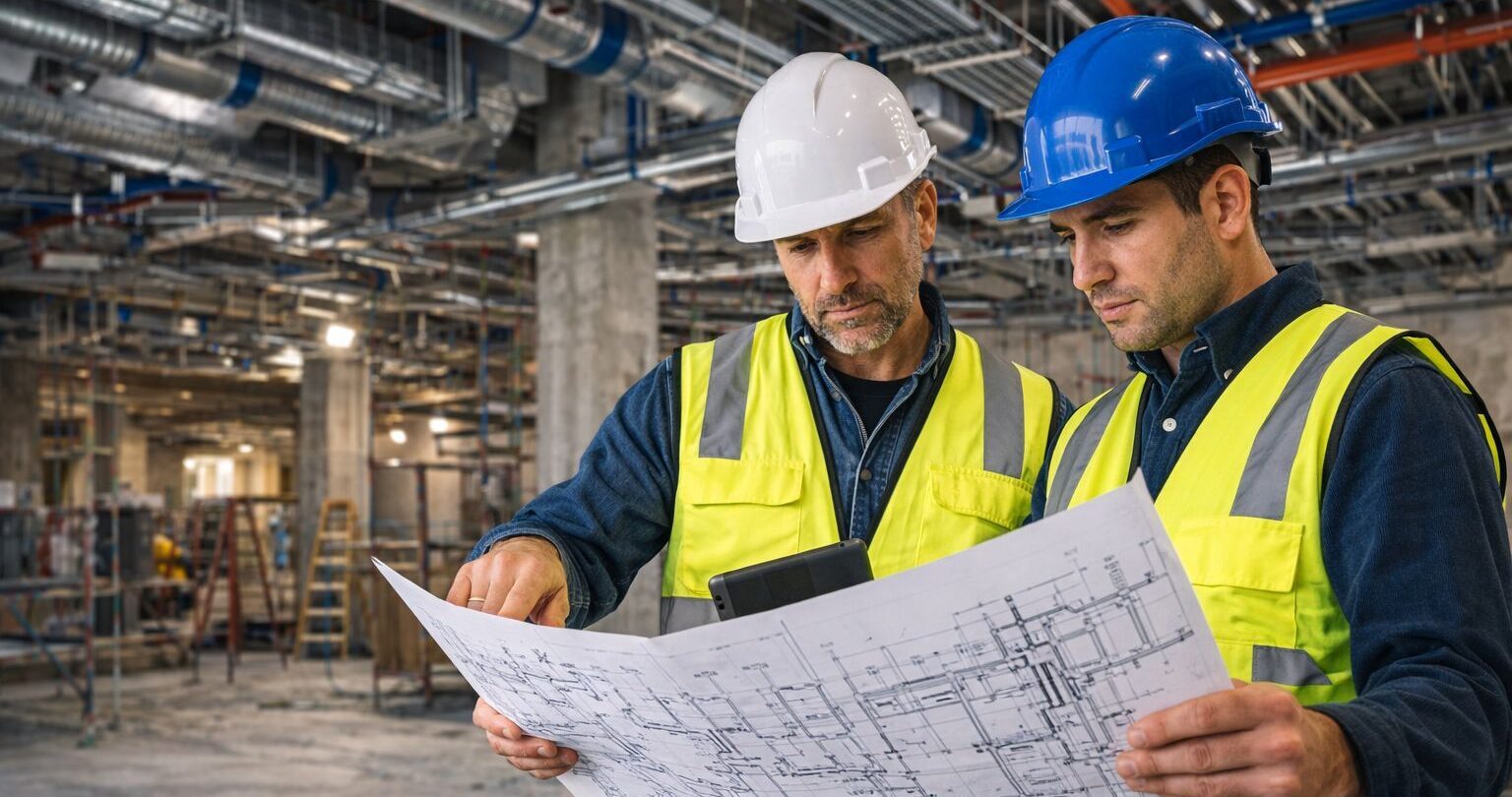
What Is MEP Drafting in Construction Projects?
Modern buildings depend on much more than concrete, walls, and finishes. Behind every functional building is a network of systems that make the space livable, safe, and efficient. These systems include cooling, ventilation, electricity, water supply, drainage, fire protection, and other technical services. The planning of these systems begins long before construction starts, and this is where MEP drafting becomes essential.
MEP drafting stands for Mechanical, Electrical, and Plumbing drafting. It is the process of creating technical drawings that show how these systems will be routed, installed, and coordinated inside a building. These drawings guide engineers, consultants, contractors, and installation teams during construction. Without MEP drafting, building services often clash with structural elements or with each other, leading to delays, rework, and higher project costs. 
In modern construction, MEP drafting is no longer limited to simple 2D layouts. It now includes detailed coordination drawings, shop drawings, and BIM-based models that help teams detect conflicts before work begins on site.
What Is MEP Drafting in Construction?
MEP drafting in construction is the process of preparing detailed technical drawings for mechanical, electrical, and plumbing systems before installation begins. These drawings show exact routing, dimensions, equipment locations, and coordination between building services to ensure construction work happens without clashes or delays.
What Does MEP Mean in Construction?
MEP represents three engineering disciplines that control building functionality:
•Mechanical: HVAC systems, ventilation, ductwork, chilled water piping
•Electrical: Power layouts, lighting, cable routing, panels, emergency systems
•Plumbing: Water supply, drainage, sanitary systems, vent lines
Each discipline is designed separately but must fit inside the same physical building space.
A building may look simple architecturally, but inside ceilings, shafts, plant rooms, and service corridors, dozens of systems must fit precisely.
That precision is achieved through drafting.
What Is the Purpose of MEP Drafting?
The purpose of MEP drafting is to convert engineering calculations and design concepts into practical construction drawings.
These drawings help answer critical construction questions:
•Where exactly will ducts pass?
•How much clearance is needed above ceilings?
•Where should cable trays run?
•How will plumbing slopes be maintained?
•Which services cross structural beams?
Without detailed drafting, these questions remain unresolved until site work begins.
That is one of the main reasons why construction delays often happen.
How MEP Drafting Works in a Construction Project
MEP drafting usually starts after architectural and structural drawings are available.
The process follows a clear technical workflow:
1. Review of Architectural and Structural Drawings
Drafting teams first study:
•floor plans
•reflected ceiling plans
•beam layouts
•slab levels
•shaft positions
This helps identify available service space.
2. Mechanical Layout Development
HVAC systems are drafted first in many projects because ducts occupy large ceiling space.
Mechanical drawings include:
•diffuser positions
•equipment locations
•AHU placement
•chilled water piping
3. Electrical Layout Drafting
Electrical systems are then planned around available routes.
This includes:
•cable tray routing
•lighting points
•panel board locations
•socket distribution
•emergency circuits
4. Plumbing Drafting
Plumbing systems must maintain slope and gravity flow.
Drafting includes:
•drainage lines
•water supply lines
•vent systems
•sanitary fixture connections
5. Coordination and Clash Checking
All systems are combined to check whether they conflict.
This stage is one of the most critical parts of MEP drafting because ductwork, pipes, and cable trays often compete for the same ceiling space. 
Types of MEP Drawings Used in Construction
MEP drafting does not produce only one type of drawing.
Several drawing types are created depending on project stage.

Shop drawings are much more detailed than design drawings because site teams use them directly during installation.
Difference Between Design Drawings and MEP Shop Drawings
Many people confuse these two.
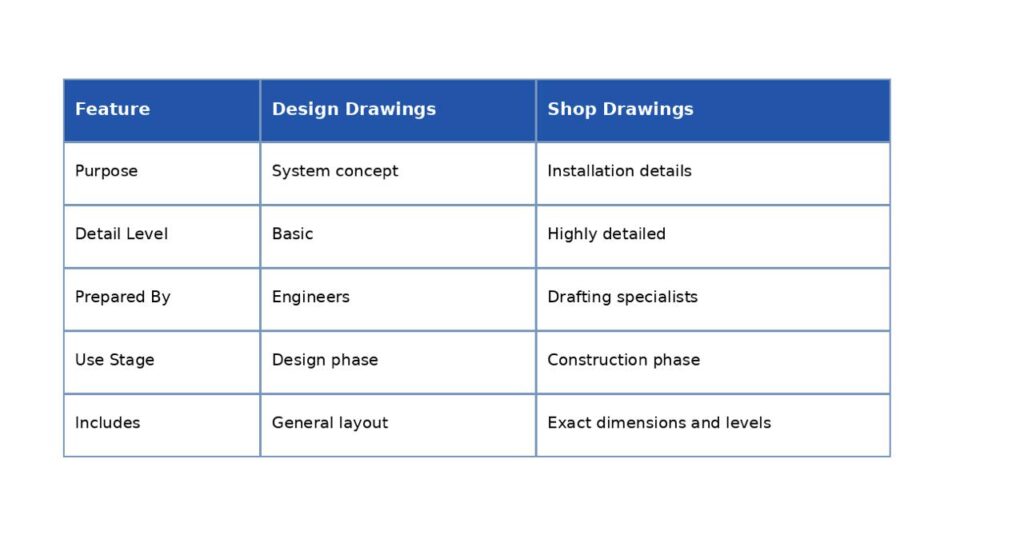
This difference is critical because approval drawings alone are not enough for installation.
Why MEP Drafting Is Critical in Modern Construction
MEP drafting directly affects project quality, cost, and timeline.
Poor drafting causes:
•service clashes
•ceiling rework
•wrong equipment placement
•poor maintenance access
•delayed approvals
Accurate drafting prevents these problems before installation begins.
That is why many contractors now depend on BIM-supported drafting rather than basic 2D layouts.
MEP Drafting and BIM in Today’s Projects
Traditional drafting used only 2D CAD.
Today many projects use BIM because BIM adds:
•clash detection
•elevation control
•automatic updates
When a duct changes in BIM, related sections and views update automatically.
This reduces drafting errors significantly.
In large commercial projects, BIM is now preferred because manual coordination is too risky.
Common Errors in MEP Drafting
Even experienced teams face recurring drafting mistakes.
The most common are:
•duct crossing beams
•pipe slope errors
•missing access zones
•overloaded ceiling space
•wrong equipment clearance
•inconsistent levels
These mistakes often remain hidden until site installation begins.
That is why review and coordination are essential.
Who Uses MEP Drawings on Site?
MEP drawings are not only for engineers.
They are used by:
•HVAC contractors
•electricians
•plumbers
•site engineers
•consultants
•authority reviewers
Every team depends on drafting accuracy.
How MEP Drafting Supports Faster Approvals
Authorities often review:
•fire safety routing
•electrical safety layouts
•ventilation systems
•plumbing compliance
Incomplete drawings often cause repeated submissions.
Accurate drafting speeds up approval cycles.
MEP Drafting in Qatar Construction Projects
In Qatar, service coordination has become more important because many projects include:
•high-rise buildings
•commercial towers
•complex HVAC systems
•strict authority requirements
For complex projects, working with the best mep company in qatar helps reduce approval delays and improve site execution because properly coordinated MEP drawings directly affect construction efficiency.
Future of MEP Drafting
MEP drafting is moving toward:
•BIM automation
•intelligent object libraries
•digital clash reporting
•AI-assisted layout review
The goal is not only drawing production, but smarter coordination.
Conclusion
MEP drafting is one of the most important technical stages in construction projects because it translates engineering design into buildable site instructions.
Without accurate MEP drawings, even well-designed buildings face delays, installation conflicts, and unnecessary costs.
As projects become more complex, detailed drafting, coordination, and BIM integration are becoming essential rather than optional.




2 Comments
laga88slotlogin
March 18, 2026
I love the way the promotions are handled here. Everything is transparent and the winning streaks are real. You should definitely try laga88slotlogin today.
iny7777
March 18, 2026
The bonuses here are legit and the registration process took me less than two minutes. Really impressed with the speed. iny7777