
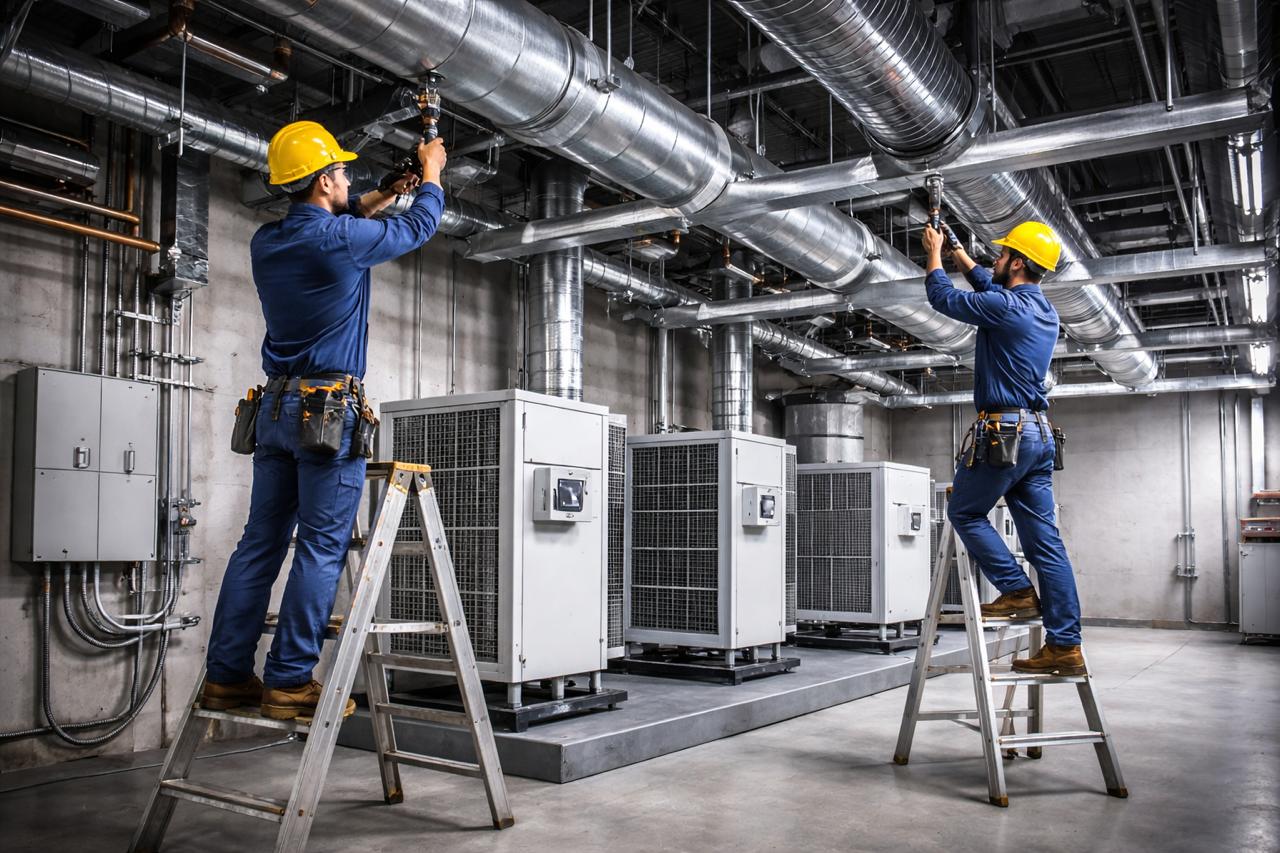
How HVAC Systems Work: Heating, Ventilation, and Air Conditioning Explained
Introduction
Modern buildings rely on advanced mechanical systems to maintain comfortable and healthy indoor environments. One of the most important systems responsible for this is the HVAC system. HVAC stands for Heating, Ventilation, and Air Conditioning, and it plays a critical role in regulating indoor temperature, airflow, humidity levels, and overall air quality.
From residential homes to commercial towers and industrial facilities, HVAC systems ensure that indoor spaces remain comfortable regardless of outside weather conditions. These systems are carefully engineered using principles of thermodynamics, fluid mechanics, and heat transfer to create stable indoor environments.
Understanding how HVAC systems work is important for contractors, engineers, building owners, and project managers. A clear understanding of HVAC operations helps improve system planning, reduce energy consumption, and ensure long-term building performance.
What Is an HVAC System?
An HVAC system is an integrated mechanical system designed to control indoor environmental conditions. It combines heating, ventilation, and air conditioning technologies to maintain comfortable indoor temperatures while ensuring proper air circulation and air quality.
The primary goals of HVAC systems include:
- Maintaining consistent indoor temperature
- Providing fresh and clean air circulation
- Controlling humidity levels
- Removing indoor pollutants and odors
- Supporting energy-efficient building operation
In modern construction projects, HVAC systems are often integrated with building management systems (BMS) and automated control technologies. This allows buildings to monitor temperature, airflow, and energy consumption more efficiently.
The Three Core Elements of HVAC Systems
HVAC systems consist of three primary functions that work together to maintain indoor climate conditions.
Heating
The heating component provides warmth during colder seasons. Heating systems generate heat and distribute it throughout the building to maintain comfortable indoor temperatures.
Common heating systems include:
- Gas furnaces
- Electric heating systems
- Boilers using hot water or steam
- Heat pump systems
- Radiant floor heating systems
Heating systems distribute warmth through duct networks, radiators, or floor systems depending on the building design and mechanical setup.
Ventilation
Ventilation is responsible for circulating fresh air throughout the building while removing stale or contaminated air. Without proper ventilation, indoor air can accumulate pollutants, humidity, and carbon dioxide, which can affect occupant health and comfort.
Ventilation systems help by:
- Introducing fresh outdoor air into indoor spaces
- Removing stale air and pollutants
- Maintaining balanced air pressure within the building
- Controlling humidity and moisture levels
Ventilation systems usually consist of duct networks, exhaust fans, air handling units, and fresh air intake systems that help maintain proper air circulation.
Air Conditioning
Air conditioning systems cool indoor spaces by removing heat and controlling humidity levels. Cooling systems work through a refrigeration cycle that transfers heat from inside the building to the outdoor environment.
This cooling process typically involves components such as:
- Compressor
- Condenser coil
- Evaporator coil
- Refrigerant circulation system
The evaporator coil absorbs heat from indoor air while the compressor and condenser release that heat outside the building. The cooled air is then distributed throughout the building via ductwork.
Key Components of an HVAC System
Although HVAC systems can vary depending on building type and application, most systems include several essential components.
Thermostat
The thermostat acts as the control center of the HVAC system. It monitors indoor temperature and activates heating or cooling systems based on user settings.
Air Handling Unit (AHU)
The air handling unit circulates and conditions air throughout the building. It contains fans, filters, heating coils, and cooling coils that prepare air before distribution.
Ductwork
Duct systems distribute heated or cooled air throughout the building. Proper duct design ensures balanced airflow and efficient energy use.
Poor duct design can lead to uneven temperature distribution and increased energy consumption.
Compressor
The compressor is a key component of air conditioning systems. It circulates refrigerant throughout the cooling system and helps transfer heat outside the building.
Condenser and Evaporator Coils
These components facilitate heat exchange. The evaporator coil absorbs heat from indoor air, while the condenser releases that heat outside.
How HVAC Systems Operate in Buildings
HVAC systems operate through a continuous cycle that conditions and distributes air throughout a building.
The general operating process includes the following steps:
1. Air Intake
Fresh air enters the system through ventilation ducts or outdoor air intake points.
2. Air Filtration
Air filters remove dust, particles, and contaminants from the air.
3. Temperature Conditioning
The system heats or cools the air depending on indoor temperature requirements.
4. Air Distribution
Conditioned air is pushed through duct networks to various rooms.
5. Return Air Cycle
Used indoor air returns to the HVAC unit where it is filtered and conditioned again.
This cycle continuously regulates indoor temperature and airflow.
Types of HVAC Systems Used in Buildings
Different building types require different HVAC system configurations depending on their size, purpose, and environmental conditions.
Common HVAC systems include:
- Split HVAC systems
- Packaged HVAC units
- Chilled water HVAC systems
- Variable Refrigerant Flow (VRF) systems
- Heat pump systems
Split systems use separate indoor and outdoor units, while packaged systems combine heating and cooling components in a single unit.
Large commercial buildings often rely on centralized HVAC systems connected to chillers and cooling towers to manage indoor climate across multiple floors.
Importance of HVAC Design in Construction
HVAC system design plays a major role in overall building performance. Improper HVAC planning can lead to several operational problems such as poor airflow, high energy consumption, and uncomfortable indoor environments.
Proper HVAC design involves:
- Heating and cooling load calculations
- Airflow and duct sizing analysis
- Equipment selection and placement
- Coordination with architectural and structural layouts
In complex construction projects, HVAC systems must also be coordinated with electrical and plumbing services to avoid installation conflicts.
Because HVAC design requires technical expertise and detailed planning, many construction teams rely on experienced consultants or the best HVAC company in Qatar to ensure systems are properly designed and documented before installation begins.
Common Challenges in HVAC Systems
Even well-designed HVAC systems can face operational challenges if not properly maintained or installed.
Some common HVAC issues include:
- Incorrect system sizing
- Poor duct routing
- Blocked airflow pathways
- Lack of proper ventilation
- Poor maintenance practices
These issues can reduce energy efficiency and negatively affect indoor comfort levels.
Regular maintenance, accurate engineering calculations, and proper installation practices help prevent these problems and extend system lifespan.
The Future of HVAC Technology
HVAC technology continues to evolve as buildings become more energy-efficient and environmentally sustainable.
Modern HVAC systems increasingly incorporate:
- Smart thermostats and automation systems
- Energy-efficient heat pump technologies
- Advanced air filtration solutions
- Integration with building management systems
These innovations help reduce energy consumption while improving indoor comfort and operational efficiency.
Conclusion
HVAC systems are essential components of modern buildings, providing heating, ventilation, and cooling to maintain comfortable and healthy indoor environments. By regulating temperature, improving air circulation, and controlling humidity levels, HVAC systems support both occupant comfort and building efficiency.
Understanding how HVAC systems work helps engineers, contractors, and building owners make better decisions when planning construction projects or upgrading building systems. Proper HVAC design, installation, and maintenance ensure that buildings remain energy-efficient, comfortable, and reliable for years to come.




Add a comment